
A passive-aggressive choice rather than a direct confrontation...
Emily Dickinson on welcoming the prowling bee.

Dear Reader,
If my labour of love enriches you in any way - if you find yourself enjoying the lighter tone encounters to serious academic reviews - then, please consider subscribing to my newsletter. A free subscription would bring to you all the posts that are open for public reading; and a paid subscription would bring to you the series of ‘Books Shelved under Environment and Literature’ and ‘Erotica Literature’. Your contributions make this work sustainable.
Love, Suh.
“I hide myself within my flower”
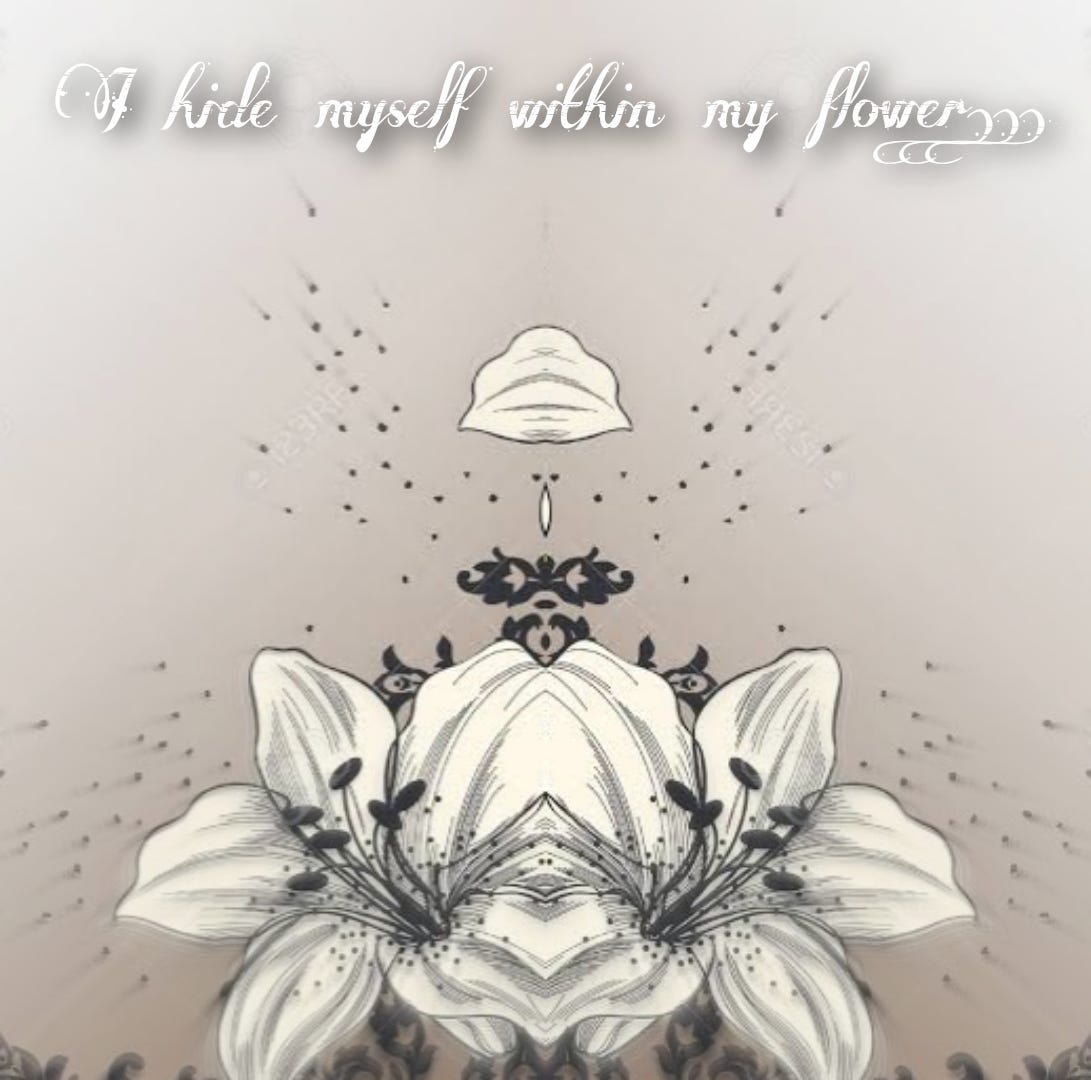
I hide myself within my flower,
That wearing on your breast,
You, unsuspecting, wear me too-
And angels know the rest.
I hide myself within my flower,
That, fading from your vase,
You, unsuspecting, feel for me
Almost a loneliness.
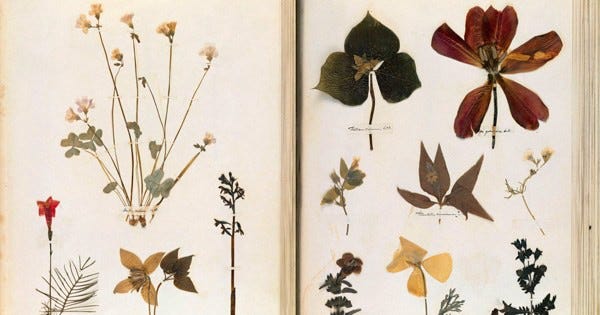
Although Emily Dickinson’s fascination with plants and flowers has long been acknowledged, this poem further opens up the alley in understanding her love for botany. “I hide myself within my flower” allows us to explore Dickinson’s avocation as a gardener. We often see a “world” similar and yet different that is expressed in her poetry. Perhaps, this is so because Dickinson aligns the interests of her world (which we can relate to an extent) with the interests of the world of plants and flowers (which is not easily relatable).
Whether she wrote about love or war, ugliness or beauty, vanity or virtue, heaven or hell, her flower garden often provided her with the narratives, tropes, and imagery she required.
(I would prefer to think of the speaker as Dickinson herself, and for the rest of this post the poet speaker is referred to the poet herself.) A flower comes to Dickinson’s aid in this poem. It allows her to express her vulnerability of being in an ephemeral relationship.
Let’s take a look at the poem in sections:
(1) I hide myself within my flower,
(2) That wearing on your breast,
Emily Dickinson begins with a line that affirms her love for flowers. The fact that she has not specified the type of flower offers a meaning that it could be any flower from her garden. That her emotions and feelings run parallel to the experiences of flowers in her garden. She chooses to hide her ‘self’ within ‘her’ flower, probably a reference to the flower’s own abode - the plant. Once the flower is plucked, it is now worn by the person whom she loves - “wearing on ‘your’ breast”.
(3) You, unsuspecting, wear me too-
(4) And angels know the rest.
As soon as Dickinson acknowledges the fact that her beloved has worn the flower, she immediately contrasts it with a homonym “wear”. The flower is plucked from the plant and is worn as an accessory, but soon, it dries up, and only angels know the secret of aesthetic beauty amidst life and death. Similarly, Dickinson is sought (“wearing”) by her beloved and remains interesting until her beloved (“you”) tires (“wear”) her out. The pain of her broken-ness remains a secret that only angels know.
(5) I hide myself within my flower,
(6) That, fading from your vase,
The reiteration of the title line strongly emphasises Dickinson’s unification of her human world and the world of flowers. She, that is, her ‘self’ takes recluse in the flower, is now venting out her agony of drying up in the vessel (“vase”). She is trying to cry out loud that her significance in her beloved’s life is degenerating (“fading”).
(7) You, unsuspecting, feel for me
(8) Almost a loneliness.
The constant reference to her beloved as the “unsuspecting” evokes a common feeling that every being has experienced in an unrequited love. The flower never suspected her wearer to part ways from it. Similarly, Dickinson too never suspected to end up in an ephemeral relationship. She is expressing her vulnerability of being lonely. She is putting in all her efforts to make her beloved sense (“feel”) her presence and empathise (“feel”) with her condition of loneliness.
The poem has captured the emotion of one’s vulnerability in an ephemeral relationship. It also comes as an edict that as much as ‘love’ is real, so is the ‘pain’ of a broken relationship. Dickinson’s poetry speaks to us directly, yet demands that we pause for a minute and observe the lives of other beings (in this context, a flower) and learn from how they live their lives by only providing and not expecting anything in return. Although, the poem may appear on a gloomy-lovelorn note, it still carries within it the tenderness of forgiveness and hope.
“In each of us two powers preside, one male, one female… The androgynous mind is resonant and porous… naturally creative, incandescent and undivided.”
~ Virginia Woolf
It is also imperative to note the androgynous love that Dickinson had cultivated in her interests of plants and flowers. The fact that there exists both the male and the female in a flower is very symbolic of the human nature itself. A woman always has the inclination of a man’s thinking in her, and so does the man who has the inclination of a woman’s thinking. Dickinson often addresses the woman in a man to open her eyes and witness the struggle of another woman. To her, true love is when the androgynous nature of the lovers is felt, acknowledged and accepted.
Complement your reading with Emily Dickinson on Heartbreak.